The Invisible Methane Gap in Palm Oil

- by
- Mosaix
- September 10, 2026
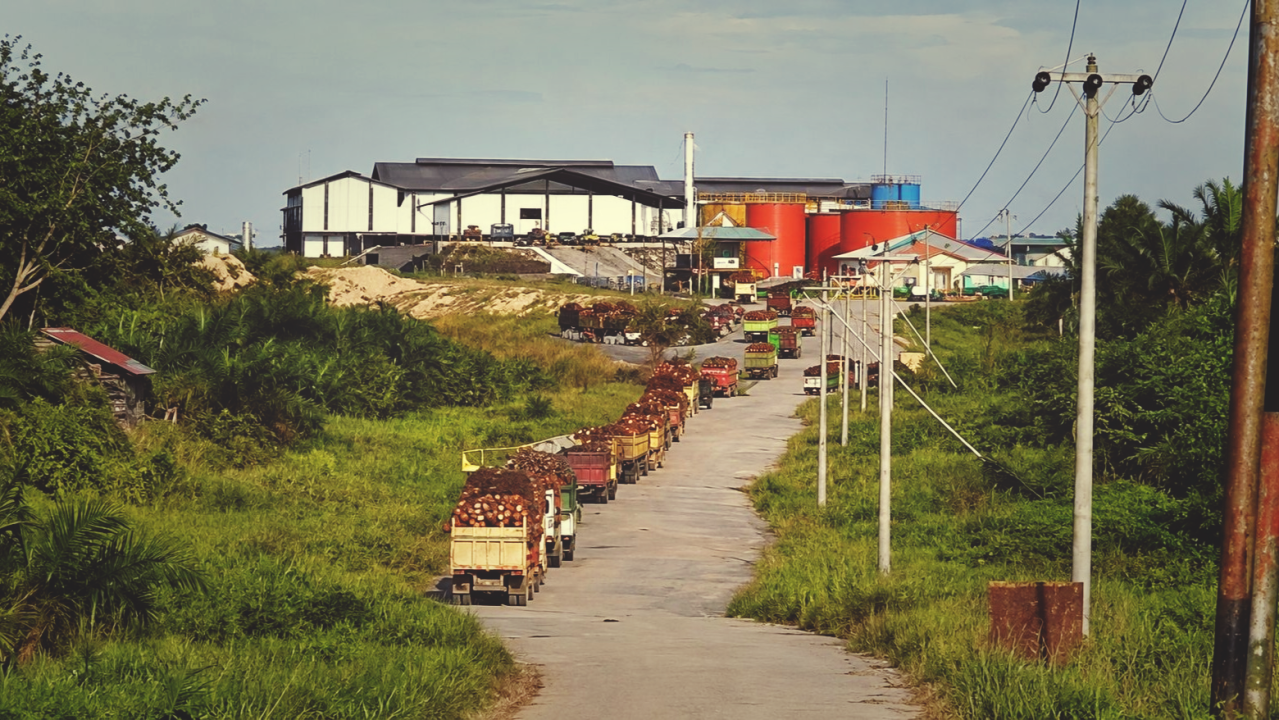
At a palm oil mill, the most visible signs of production are easy to recognize: trucks carrying fresh fruit bunches, steaming sterilizers, piles of fibre and shell, and tanks filling with crude palm oil. One of the industry’s important climate risks, however, is almost invisible. It rises quietly from wastewater ponds.
Palm Oil Mill Effluent, usually known as POME, contains large amounts of organic matter. When it decomposes under anaerobic conditions, particularly in conventional open ponds, it produces biogas rich in methane. Studies comparing POME treatment systems have consistently shown that capturing this gas can substantially improve the climate performance of palm oil production, while also turning a waste stream into a source of energy. Research in Indonesia and Malaysia has found environmental advantages from biogas recovery compared with conventional lagoon treatment, including avoided greenhouse-gas emissions and opportunities to produce electricity or useful heat.
This matters because methane acts much faster than carbon dioxide in warming the atmosphere, and reducing methane can therefore make a meaningful contribution to near-term climate mitigation. In palm oil, the opportunity is unusually tangible. Unlike some difficult-to-abate agricultural emissions, methane from POME is concentrated around a processing facility where technologies such as covered lagoons, digesters, flaring systems and biogas engines already exist.
Yet the technology is far from universal.
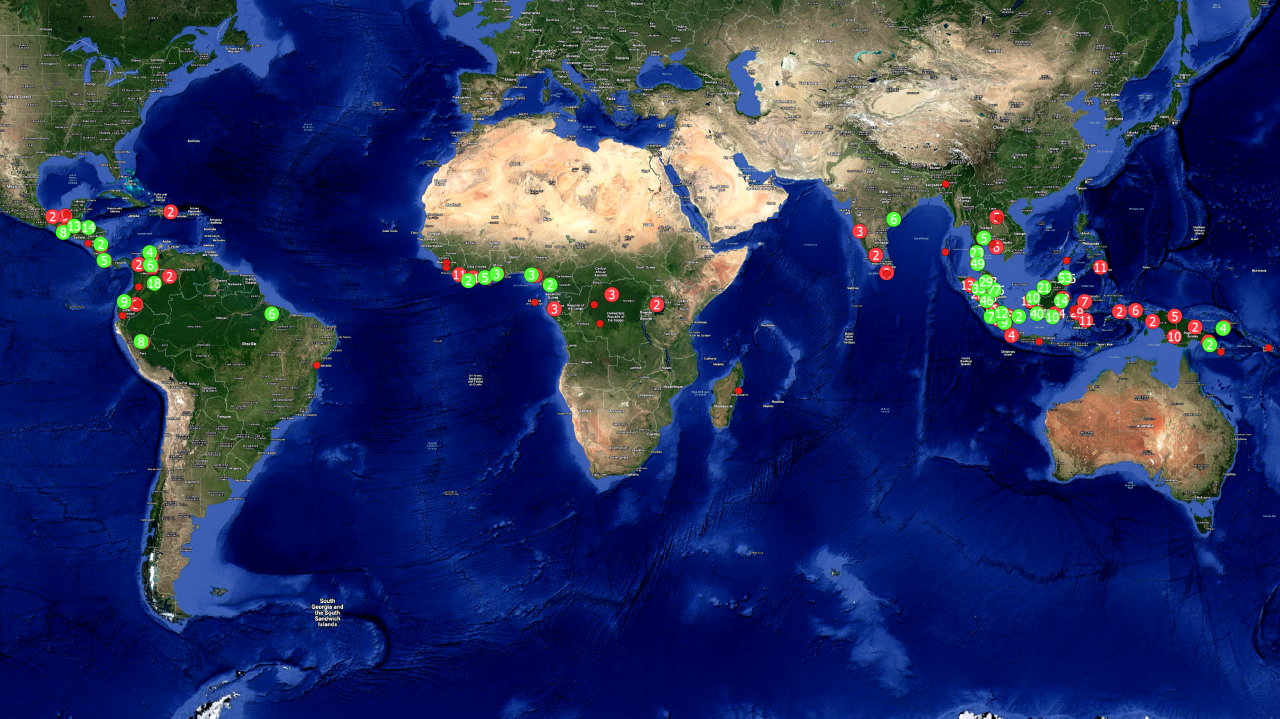
A recent review of the Earthqualizer Foundation and Inovasi Digital palm oil mill database found 2,496 mills recorded as active globally. Only 567, around 23 percent, were recorded as having a methane capture facility. More than three-quarters were recorded without one, and roughly 1,843 active mills were associated with open-lagoon treatment without methane capture. These figures reflect the current curated database rather than a complete official global census, but the pattern is difficult to ignore: methane capture remains the exception rather than the norm across a large part of the industry.
The gap is especially striking in Indonesia, where only about 11 percent of active mills in the database are recorded with methane capture, compared with substantially higher shares in Malaysia and Thailand. Public information shows that the issue has been recognized for many years. A Global Methane Initiative resource assessment published in 2015 noted that 38 methane-capture projects at Indonesian palm oil mills had been registered under the Clean Development Mechanism. That historical record shows that the technology itself is not new; what remains unresolved is how to scale it consistently across thousands of facilities.
Some individual projects show what that scaling could mean. At Sukajadi Sawit Mekar in Central Kalimantan, a UNFCCC-registered methane-recovery project estimated annual reductions of about 52,125 tonnes of CO₂ equivalent. At Pelakar Mill in Jambi, another project combining methane recovery with electricity generation estimated reductions of roughly 13,446 tonnes of CO₂ equivalent per year. These are project-specific figures rather than values that can be applied to every mill, but they demonstrate that POME methane mitigation can be substantial at facility level.
More recent research also suggests that the climate benefit can be linked with operational value. A 2026 field-scale study of POME-derived biogas used in a palm oil mill boiler reported methane-related mitigation of around 9,579 tonnes of CO₂ equivalent per year alongside a positive operating benefit from substituting part of the mill’s conventional fuel use. The broader lesson is important: methane capture does not have to be seen only as a compliance cost. In the right conditions, it can be part of a mill’s energy and resource-efficiency strategy.
This is becoming more relevant as corporate climate reporting moves deeper into the supply chain. The GHG Protocol’s Corporate Value Chain Standard was designed not simply to total Scope 3 emissions, but to help companies understand where value-chain impacts occur and where reduction efforts should be focused. Its new Land Sector and Removals Standard goes further for agricultural supply chains, providing more specific requirements for companies to account for land-related emissions and removals in their operations and value chains. The standard becomes effective in January 2027 and builds directly on the Corporate and Scope 3 Standards.
For a buyer of palm oil, this changes the meaning of Scope 3. A corporate carbon number is useful, but it tells only part of the story. What matters operationally is whether that number can be traced back to the plantations, mills and management practices that created it. Two mills processing similar volumes of fruit may have very different climate footprints depending on their sourcing, land-use history, fertilizer use, transport patterns and POME management. When those differences become visible, Scope 3 reporting starts to become a tool for deciding where action is possible rather than simply documenting what has already happened.

Satellite data may provide another piece of that picture. As an exploratory assessment, we compared 100 Indonesian mills recorded with methane capture and 100 without, using methane observations from the Copernicus Sentinel-5P TROPOMI instrument for 2025 and 2026. For each mill, atmospheric methane around the facility was compared with a wider regional background. Among observations that passed the quality filters, mills without methane capture showed a higher average methane enhancement than the group with methane capture.
The result is intriguing, but it requires caution. Sentinel-5P measures the concentration of methane in the atmospheric column, not the tonnes of methane emitted by an individual facility. The official Earth Engine documentation also notes retrieval limitations, including noise, striping and uncertainty in individual observations. TROPOMI was designed to help observe atmospheric methane patterns and support modelling of sources and sinks; it should not be treated as a direct meter attached to a palm oil mill.
Its value may instead lie in adding an independent layer of observation. A mill database may say that a methane capture system exists. Operational data may estimate how much methane should be destroyed. Satellite observations can help ask a different question: does the surrounding atmosphere show a pattern that is consistent with that expectation? If the answer is unexpected, it can guide a closer investigation rather than deliver an automatic verdict.
This is where MosaiX and Inovasi Digital see a broader role for supply-chain intelligence. Their work combines mill and supplier traceability, plantation and land-use information, GHG assessment, methane-capture facility data, transport analysis and geospatial monitoring. The aim is not to replace company primary data or engineering measurements, but to connect otherwise fragmented information so that climate reporting becomes more specific to actual suppliers and places.
In practice, that means helping companies understand which mills in their sourcing network have open lagoons, which already have methane capture, where emission estimates are highest, and where independent spatial evidence suggests further verification may be useful. It also means connecting methane with the rest of the Scope 3 picture, including land-use change, peat, fertilizer use, transport and carbon removals. The GHG Protocol itself increasingly emphasizes the importance of consistent, traceable and decision-useful information for agricultural value chains.
The challenge ahead is not only technological. Methane capture projects require capital, reliable operation, competent maintenance and a reason for the mill to keep the system functioning after installation. Buyers may benefit from lower Scope 3 emissions, while the investment has to be made upstream. Banks may see a small infrastructure project, while a consumer-goods company may see a climate target. Governments may see renewable energy, wastewater treatment or rural electricity. Each party is looking at the same pond from a different angle.
That is why collaboration matters. The most promising opportunity may be to connect these interests around real facilities: producers that can reduce emissions, buyers that need credible Scope 3 reductions, technology providers that can deliver the infrastructure, and financial institutions that can help make the economics work. Malaysia’s experience with POME biogas has already been described in the scientific literature as involving not only technology, but also public-private cooperation, financial mechanisms and institutional support.
The methane rising from a palm oil mill lagoon is invisible, but the opportunity is increasingly visible. The industry already knows the chemistry. It already has proven technologies and decades of project experience. What is still missing at scale is the connection between supply-chain data, climate accounting, investment and implementation.
For Scope 3 reporting, that may be the more important lesson. Better measurement should not simply produce a more precise footprint. It should help reveal where a tonne of emissions can actually be avoided.
The global mill and methane-capture figures and the 200-mill satellite comparison cited above are based on Inovasi Digital analysis, 2026. They are presented as supply-chain intelligence and screening results, not as an official global census or direct satellite measurement of facility-level methane emissions.

 MosaiX Article