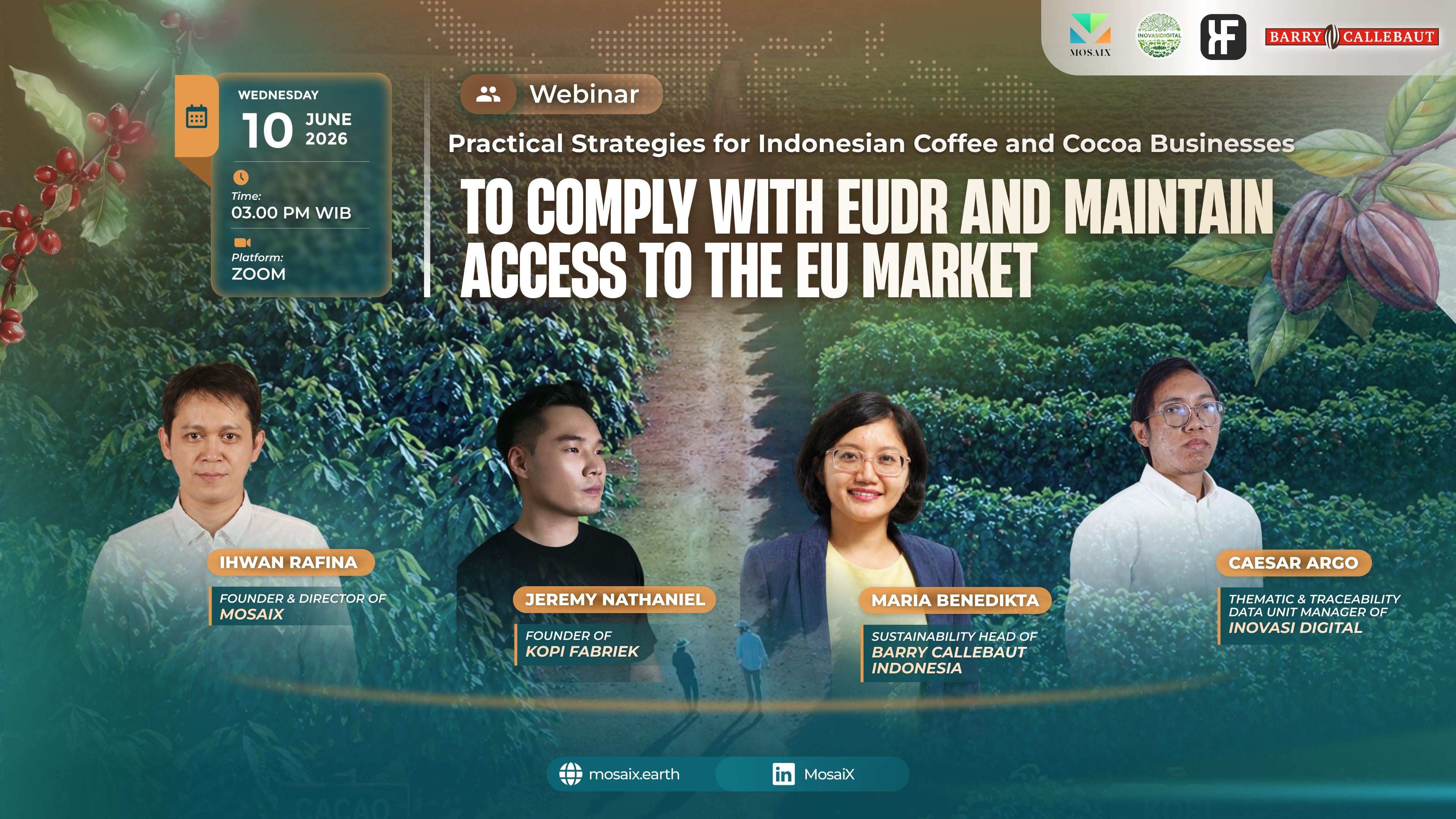
Practical Strategies for Indonesian Coffee and Cocoa Businesses to Comply with EUDR and Maintain Access to the EU Market

The EU Deforestation Regulation (EUDR) is changing how coffee and cocoa supply chains need to prepare for market access. For Indonesian businesses, the challenge is no longer only about understanding the regulation, but also about ensuring that the data, documentation, and traceability systems behind their supply chains are ready to support due diligence in practice.

Under EUDR, products entering the EU market must be deforestation-free, legally produced, and traceable to the plot or land level. In practice, this creates significant challenges for exporters, cooperatives, traders, and processors, particularly in smallholder-based supply chains.

This webinar was organized to provide a practical introduction to what EUDR means for Indonesian coffee and cocoa businesses, and to highlight the practical preparation that is now becoming necessary.

For those who missed the session, or for those who would like to revisit the discussion, we are pleased to share the webinar recording below.

[https://drive.google.com/file/d/1k–GXGqVA7AOgeiBrrCZIRkBJ4dhpJKF/preview]

Presented by: Ihwan Rafina, Founder and Director of MosaiX; Jeremy Nathaniel, Founder of Kopi Fabriek; Maria Benedikta, Sustainability Head of Barry Callebaut Indonesia; Caesar Argo, Thematic & Traceability Data Unit Manager of Inovasi Digital

MosaiX Highlights the Need to Move Beyond AI and Geospatial Technology Alone at Global Forum in Amsterdam

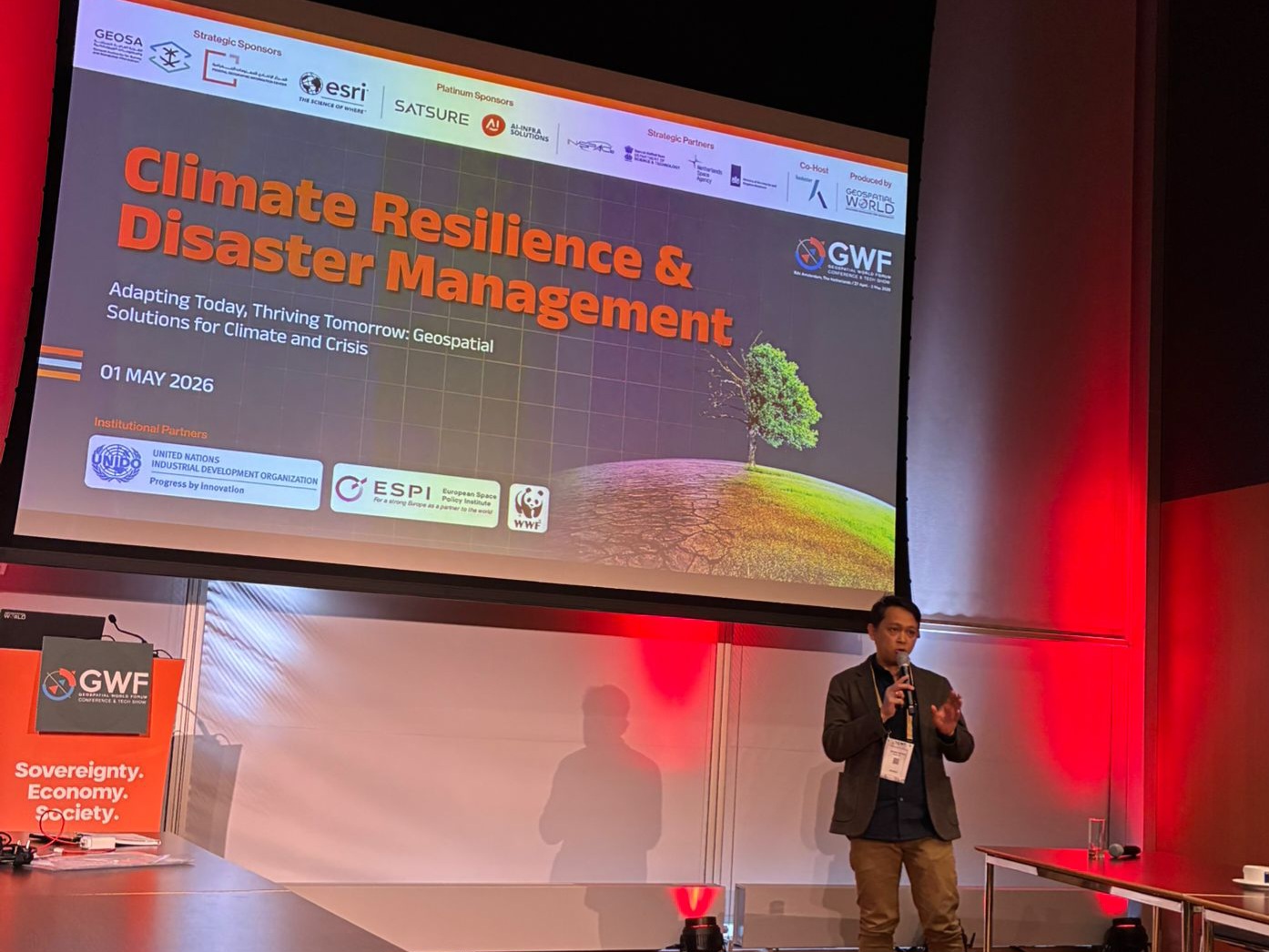
Amsterdam, The Netherlands — Last week, MosaiX joined the Geospatial World Forum 2026 in Amsterdam, where global leaders, technology innovators, policymakers, and geospatial practitioners gathered to discuss how geospatial intelligence can help the world respond to climate risks, disasters, and increasingly complex global supply chains.

Representing MosaiX, Ihwan Rafina, Founder and Director, spoke during the session “Disaster Management in a Multi-Hazard World.” His presentation, “Beyond Compliance: Building a Trusted Geospatial Intelligence Backbone for Deforestation-Free and Hazard-Resilient Supply Chains,” focused on one of the most urgent questions facing sustainability and resilience systems today: how can rapidly evolving geospatial and AI technologies be translated into trusted action on the ground?

Across the world, the race to adopt artificial intelligence, satellite monitoring, remote sensing, and automated risk analytics is accelerating. These technologies are changing how companies detect deforestation, monitor agricultural landscapes, assess disaster risks, and respond to regulatory requirements such as the EU Deforestation Regulation. They allow risks to be seen faster, mapped more clearly, and analyzed at a scale that was not possible a decade ago.

But MosaiX emphasized that technology alone is not enough.

In many agricultural supply chains, the hardest challenge is not simply detecting forest loss from space. The real challenge is proving origin, confirming land legality, understanding tenure, validating supplier information, and ensuring that smallholders and local communities are not left behind. If companies rely only on satellite data or AI-generated analysis, there is a risk of producing conclusions that look precise, but may still be incomplete, biased, or disconnected from local realities.

This is especially important in commodities such as palm oil, cocoa, coffee, and soy, where supply chains are often fragmented and shaped by informal networks, intermediaries, unclear land records, and varying legal frameworks. A satellite image may show a land-use change, but it cannot fully explain who manages the land, whether the plot is legally recognized, whether community rights are involved, or whether the farmer has access to the systems needed to prove compliance.

During the presentation, MosaiX shared that the future of geospatial intelligence should not be framed only as a race for better algorithms. It should also be a race to build better collaboration, stronger field verification, more inclusive data systems, and practical mechanisms that help people act on the information produced.

This is where transformation happens: not only in dashboards, maps, or AI models, but on the ground, through intensive engagement with suppliers, smallholders, communities, governments, civil society, and companies across the value chain.

MosaiX’s work is supported by a wider ecosystem with Inovasi Digital and Earthqualizer Foundation. Inovasi Digital plays a key role in developing practical digital platforms and geospatial tools that help companies translate complex sustainability requirements into operational workflows. These systems support traceability, deforestation-risk screening, compliance monitoring, supplier engagement, and reporting. Earthqualizer Foundation contributes long-standing field experience in forest conservation, community engagement, ecosystem recovery, and commodity-driven landscape transformation.

Together, this ecosystem bridges the gap between technology and implementation. It combines satellite-based intelligence, digital platforms, regulatory understanding, and direct field experience to support supply chains that are not only compliant, but also more resilient, inclusive, and credible.

The message from MosaiX in Amsterdam was clear: geospatial and AI technologies are powerful, but they must be used responsibly. To avoid bias, false confidence, or exclusion, they need to be supported by ground-truthing, participatory mapping, local knowledge, transparent methodologies, and collaborative decision-making.

As climate risks intensify and regulatory pressure grows, industries will increasingly depend on trusted geospatial intelligence. But the success of these systems will depend not only on how fast technology evolves, but on how well it is connected to people, places, and real action.

For MosaiX, this is the next frontier of sustainability and disaster resilience: moving beyond compliance, beyond monitoring, and beyond technology alone, toward a trusted intelligence backbone that supports transformation where it matters most, on the ground.

Mosaix is Taking Part in the 2024 Innovation Forum

Innovation Forum, as an organization known for frequently organizing events, conducting research, and providing insights on sustainability, ethical trade, and responsible business practices, plays a significant role in bringing together stakeholders from various industries around the world, including corporations, NGOs, policymakers, and academia, to discuss pressing environmental, social, and governance (ESG) issues.

On October 22-23, 2024, Innovation Forum is hosting a conference on Sustainable Commodities and Land Use with the theme “How to understand your land footprint, manage risk, and create positive impact,” in Amsterdam, Netherlands. This conference brings together stakeholders directly involved in the agricultural industry to create supply chain transformations that benefit smallholders, forests, biodiversity, and nature.

As a company that provides services and data to support sustainable practices in the agricultural industry, Mosaix is participating in this conference to contribute to high-level dialogues and exchange ideas on the best solutions for transforming the supply chain industry. Additionally, this event serves as an opportunity to build strong relationships with companies that share the same core values of sustainability.

The hope is that events like this can serve as an effective platform to formulate inclusive and comprehensive solutions in responding to current global challenges in the sustainability of agricultural commodity supply chains. As a company that firmly upholds sustainability for the betterment of the environment and society, Mosaix remains committed to continuing its efforts to provide assistance and services to help all players in the agricultural commodity supply chain—such as palm oil, soy, and coffee—achieve a compliant and sustainable supply chain.

Interested in learning more about how we can help you? Contact us!

Assisting Suppliers Readiness for EUDR Implementation with Inovasi Agriplot Due Diligence System

The implementation of the EU Deforestation-Free Regulation (EUDR) is fast approaching, requiring operators and traders who wish to market their goods in the European Union to understand and prepare for its requirements. ADM, as one of Inovasi Digital’s partners, markets products to the European market. Therefore, ADM and its suppliers need to comprehend the EUDR requirements. This necessity led to Inovasi Digital’s training for ADM’s suppliers, where EUDR and Inovasi Agriplot, a solution for EUDR compliance, were introduced.

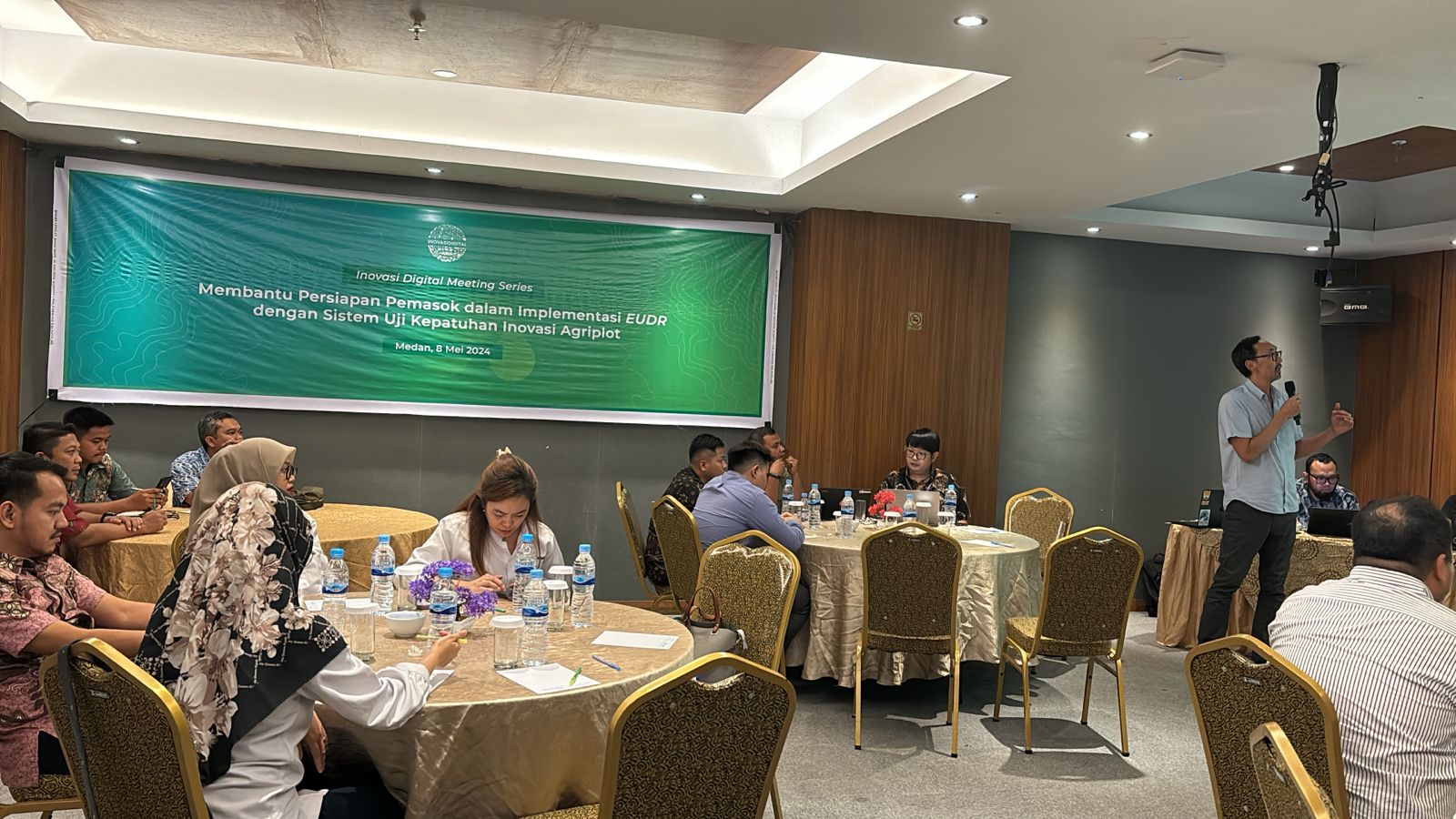
On May 8, 2024, Inovasi Digital held a meeting with ADM suppliers titled “Assisting Supplier Readiness for EUDR Implementation with Inovasi Agriplot Due Diligence System” in Medan, Indonesia. During this event, Inovasi Digital provided suppliers with an introduction to EUDR, outlined the requirements for EUDR compliance, and explained Inovasi Agriplot, a turnkey solution for EUDR assessment and compliance. The objective was to support ADM’s suppliers in preparing for EUDR compliance later this year.

In this meeting, suppliers—including growers, mills, and palm oil dealers—received a presentation on EUDR, covering the history of the regulation, key requirements, and challenges. The goal was to help suppliers understand the real challenges ahead and prepare to meet the requirements. Next, the audience was introduced to the Inovasi Agriplot Due Diligence System, a solution created by Inovasi Digital to address all EUDR requirements for both operators and traders. By introducing the Inovasi Agriplot DDS, ADM suppliers can learn how to ensure a smooth transition to using the system.

The Inovasi Agriplot Due Diligence System is a comprehensive solution for those seeking to market their goods to the EU. It covers all aspects required by the EUDR in a single product. Currently, the Inovasi Agriplot Due Diligence System fully supports palm oil and is expanding to other commodities covered by the EUDR.

With the Inovasi Agriplot Due Diligence System, you will receive:

  • Traceability through Map and Supplier Information Requirements
  • Forest Cover and Deforestation Compliance Assessment
  • Legal Compliance Assessment to National Laws
  • Risk Assessment at the District Level for Land Plots
  • Risk Mitigation Plan Development and Advice

Positioned with a unique combination of spatial data, big data processing, and on-the-ground knowledge, Inovasi Agriplot is the most accurate and trustworthy platform for meeting all operators’ EUDR needs, from tracing their supply base to completing DDS requirements to risk assessments and effective mitigation approaches.

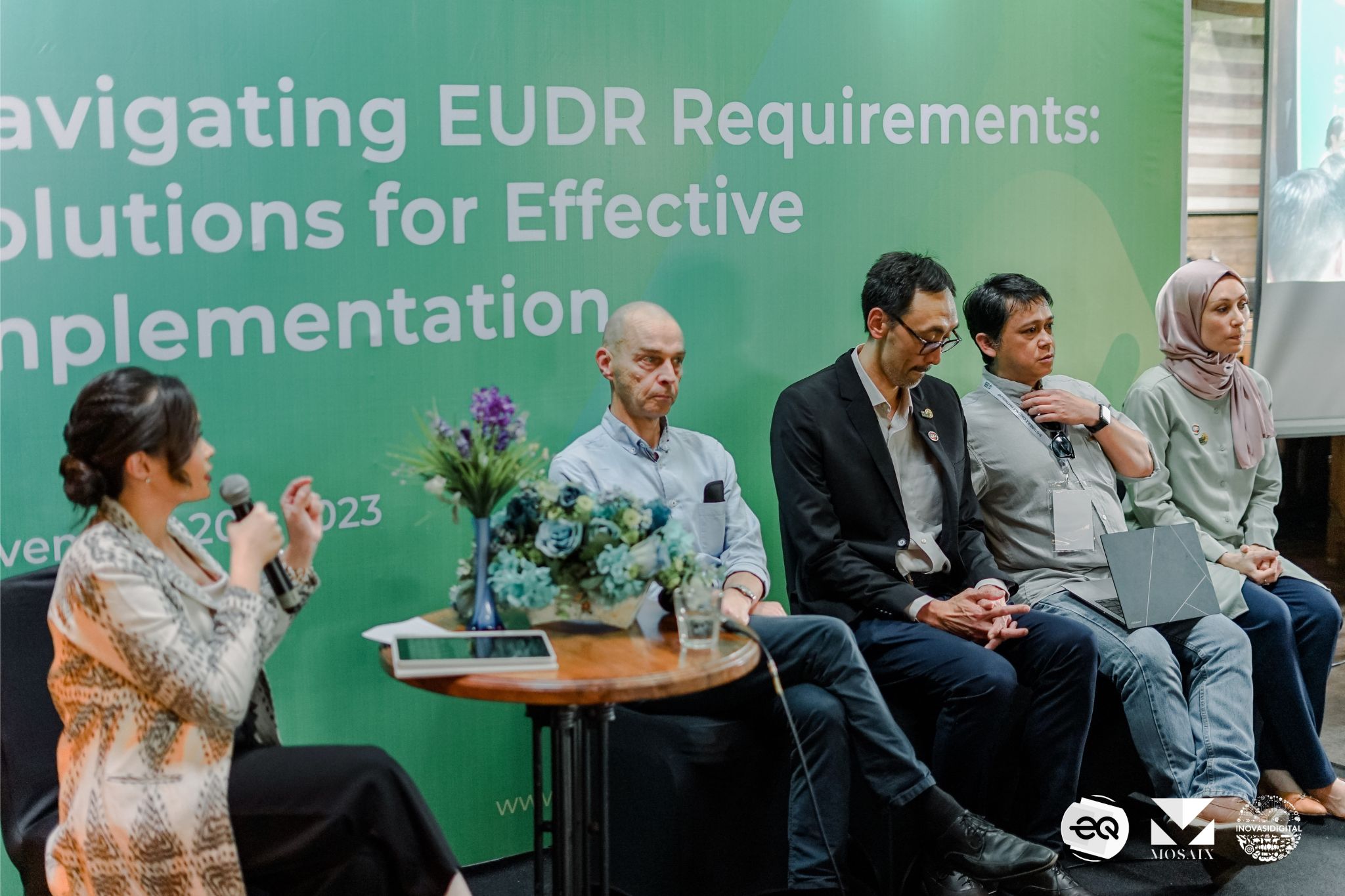
Navigating EUDR Requirements: Solutions for Effective Implementation

The EU Deforestation Regulation (EUDR) has been a prominent issue facing many operators across several key commodities who seek to trade them into and out of the European Union (EU). Palm oil is one such commodity, and the EUDR aims to stop deforestation-related commodities from entering supply chains linked to operators in the EU.

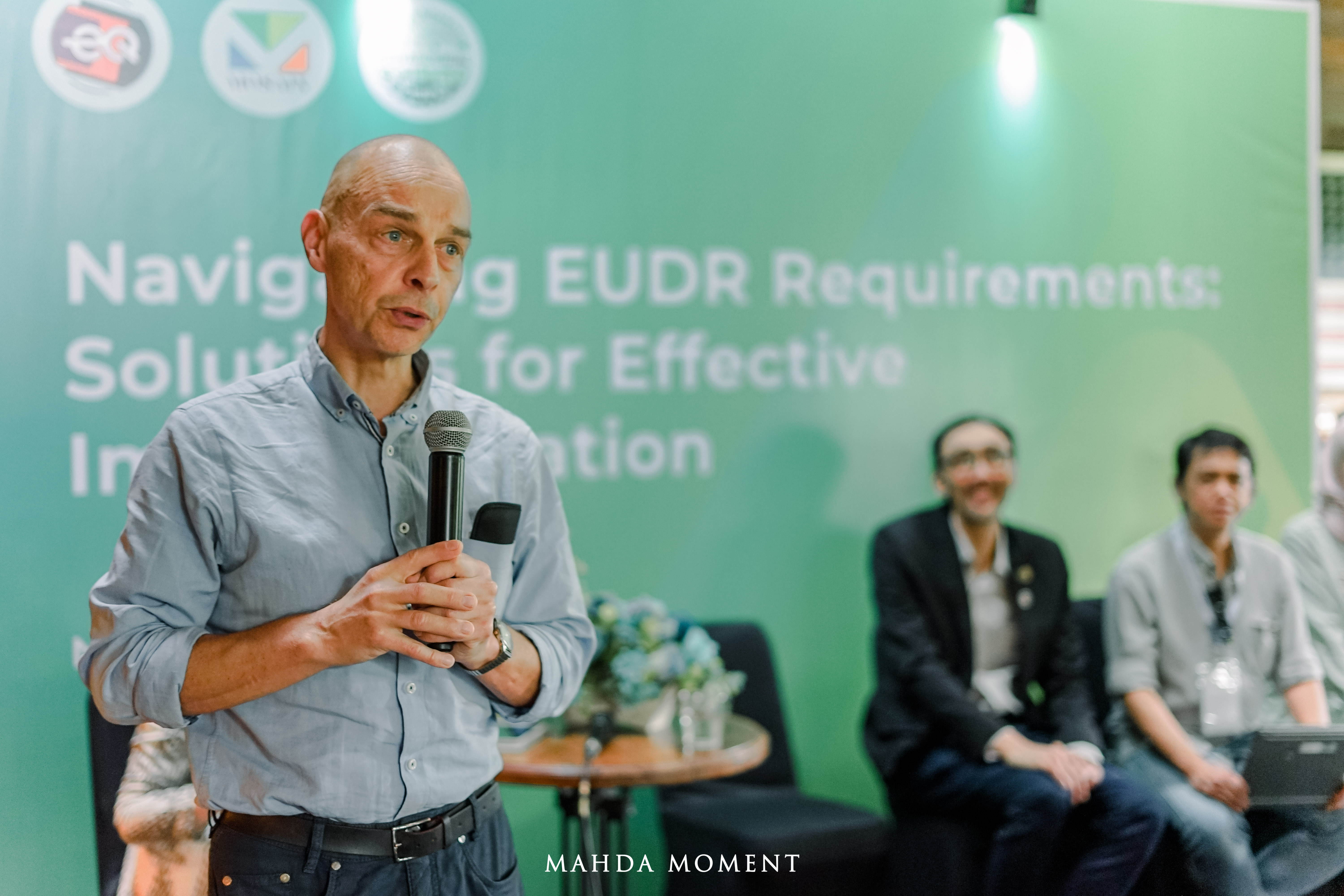
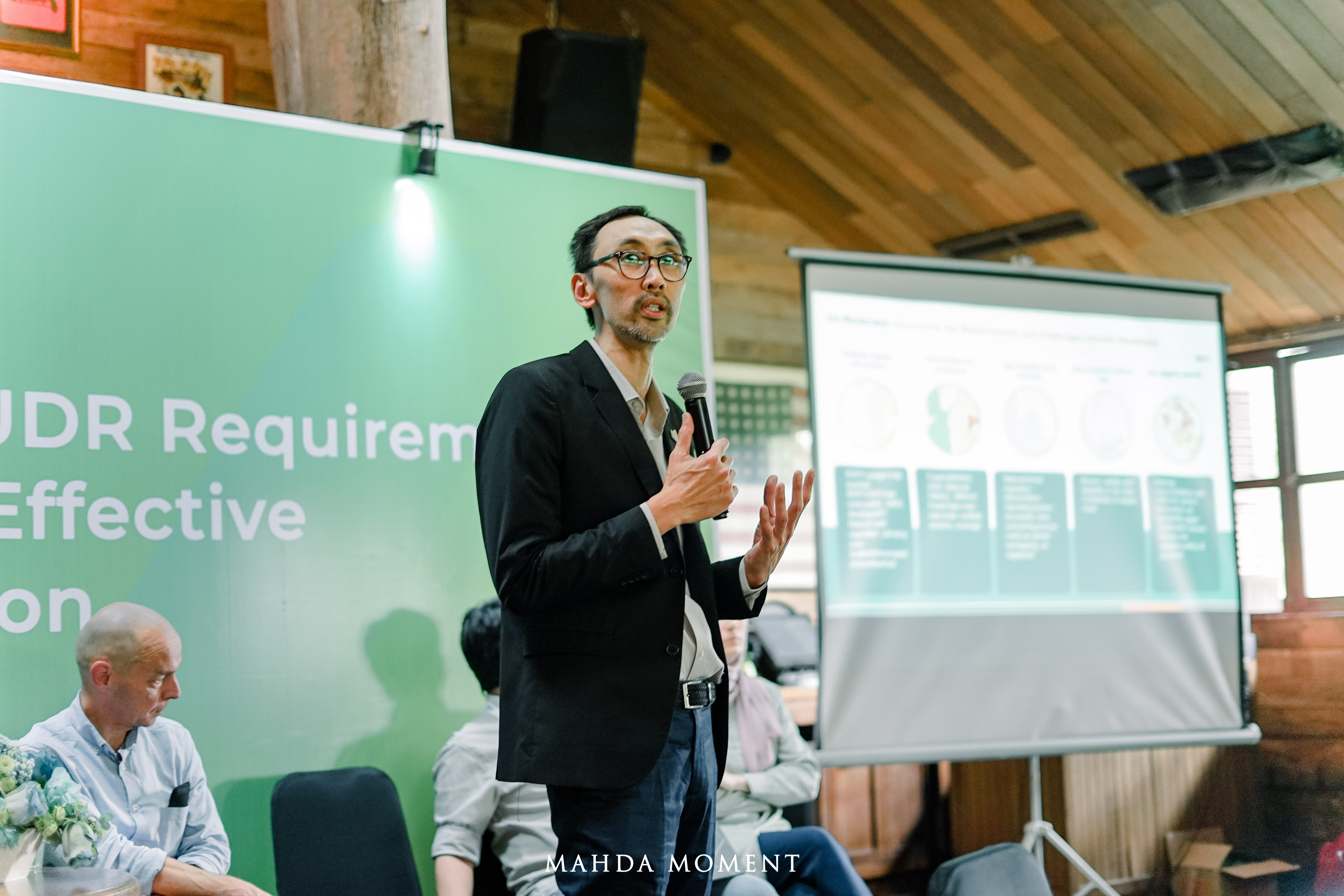
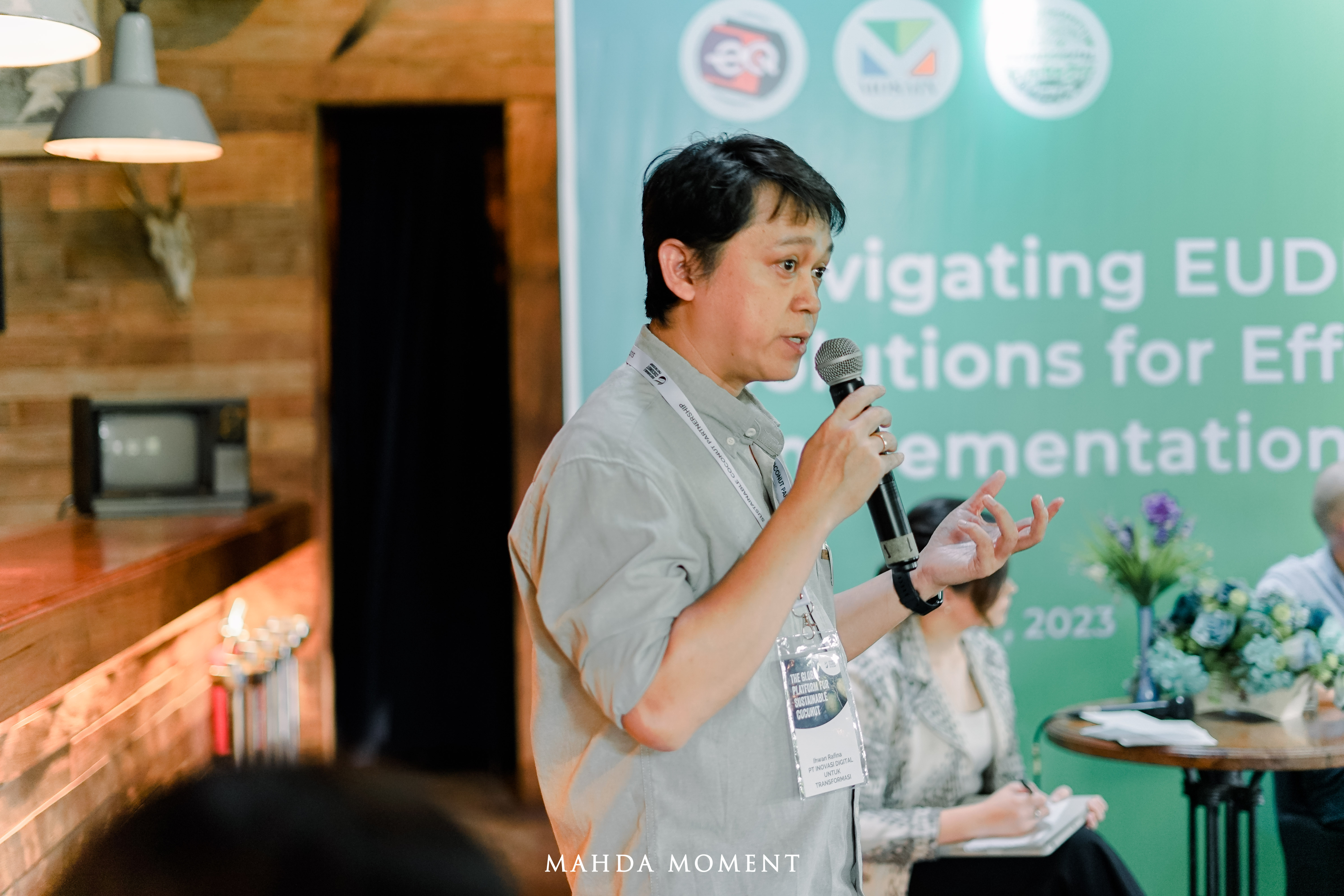
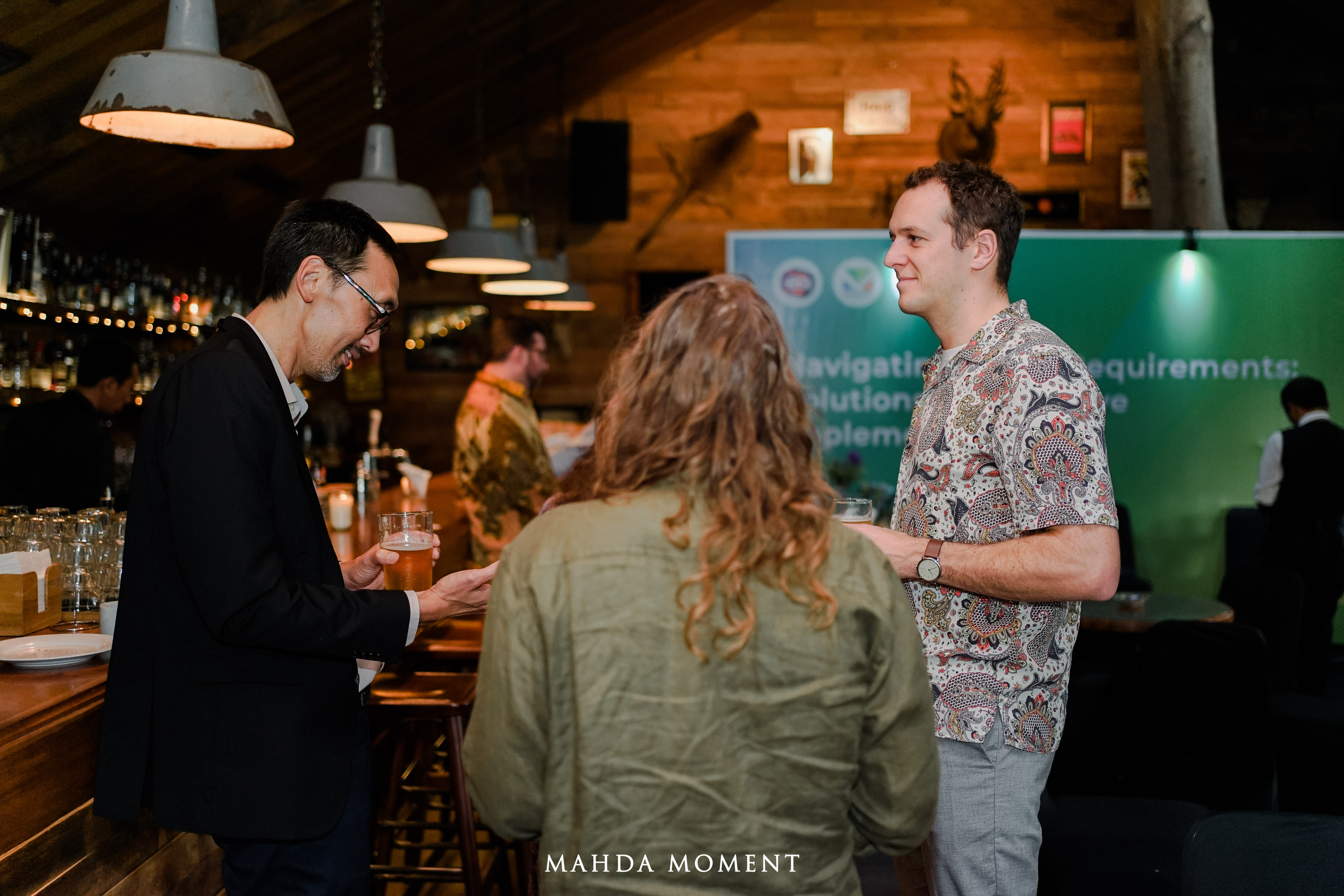
On 20th November 2023, Inovasi Digital and MosaiX held an event titled “Navigating EUDR Requirements: Solutions for Effective Implementation” at Black Pond Tavern, in Jakarta. It was hosted by Inovasi Digital and attracted over 60 participants from various companies and organizations concerned with addressing the challenges associated with EUDR implementation.

The event included presentations by Eddy Esselink from the Netherlands Oils and Fats Organization (MVO), who shared the views and concerns of operators, as well as Andrew Ng from MosaiX BV, and Ihwan Rafina from PT Inovasi Digital, who identified and explained the critical EUDR requirements through their presentation titled “EUDR Un-Redacted”. A discussion on the topic followed, which was moderated by Sara Wayne.

The moderator began the session by framing the core requirements of the EUDR for the audience. That included revisiting the evolution of the EU laws and initiatives that led to the adoption of the EUDR. Then she briefly touched upon the demands of the EUDR itself and identified the deforestation as well as legality components

The event was divided into two sessions, the first session included presentations and discussions on the challenges posed by the EUDR and the solutions developed by Inovasi Digital and MosaiX, and the second session was a cocktail event designed to facilitate the building and expansion of professional networks in a relaxed and informal setting. During the first session, the speakers delved into the current state of the palm oil sector, the challenges arising from the newly enforced EU regulation, and the solution developed by MosaiX called Inovasi Agriplot.

Eddy Esselink, Senior Program Manager of Sustainable Development of MVO

Eddy Esselink started the session by explaining that there were many unanswered questions, indicating several aspects of the regulations that remained unclear. He proposed for harmonization in the implementation of the EUDR across jurisdictions. Two specific aspects were highlighted: the need for clarity on the required documents related to legal compliance and the importance of harmonizing information for risk assessments. Eddy called for efforts to engage with governments through a coordinated response.

Andrew Ng, Sustainability Project Manager of Mosaix

The second speaker was Andrew Ng from MosaiX. Andrew covered the various requirements and potential approaches to address the EUDR. The presentation touched on the complexities of gathering verifiable and detailed information. Several approaches were then proposed with an emphasis on the critical need for reliable data sources.

Ihwan Rafina, Technical Director of Inovasi Digital

The last presenter was Ihwan Rafina from Inovasi Digital who expanded on how to address the challenges with an approach used by ID’s InovasiAgriplot system. Ihwan expanded on the types of approaches to determining mapping requirements, deforestation assessments, legal compliance, and closing of traceability gaps. Challenges due to weak points for information gathering include the supplier mills’ information, accessing legal documents, inconsistencies between official and physical data, and other technical complexities explained. Broader issues like different international and national forest definitions were discussed as well.

Ihwan compared certification information disclosure (like RSPO / MSPO) to EUDR requirements and highlighted that potential shortfalls existed that meant considering certification as compliant to EUDR cannot be assumed. Then the presentation showcased the extensive data collected by Inovasi Digital and Mosaix, which would be critical for mapping, traceability, legality, and risk assessments. The extensive data collected across different EUDR-required criteria ensures InovasiAgriplot system would identify compliant supply chains with greater accuracy. The expertise in combining Big-Data, analytics with on-the-ground experience was highlighted as the system’s main risk assessment strength.

The session was followed by a networking event where the conversation continued amongst various operators along the supply chain.


Want to know more about what we think about EUDR? Discover our solution here.